May 5, 2026
Health Policy Report – May 5, 2026
The US Oncology Network Holds NPB Annual Meeting
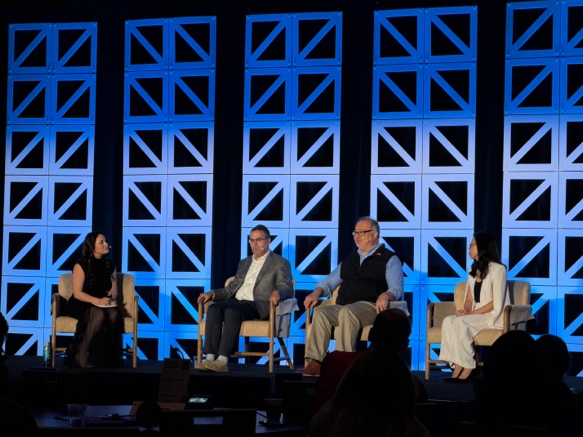
The Network’s Spring National Policy Board Meeting was held April 21–22 in Tucson, Arizona, bringing together physician leaders and executives for thoughtful discussion on the policy and market forces shaping community oncology. Among the many impactful sessions was a candid conversation on the evolution from quiet pressure to open conflict, highlighting real‑world examples of hospital anti‑competitive behavior affecting independent practices.
Pictured here are Dr. Moshe Chasky of Alliance Cancer Specialists, Dr. Matthew Lonergan of Willamette Valley Cancer Institute, Karin Chin, Vice President of Practice Growth and Marketing, and Angela Storseth, Senior Director of Government Relations and Advocacy, reflecting on the on‑the‑ground challenges physicians face as they navigate increasingly aggressive hospital competition.
The US Oncology Network Attends 2026 Community Oncology Conference
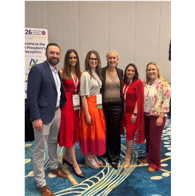

On April 28, The US Oncology Network attended the Community Oncology Alliance’s (COA) Community Oncology Conference in Orlando, Florida.COA’s Community Oncology Conference brings together stakeholders across the oncology ecosystem to share practical insights, align on policy and industry challenges, and equip community-based practices with the tools and strategies needed to deliver high-quality, accessible, and sustainable cancer care.
This year’s conference centered on the theme “Innovation in Practice,” highlighting how community oncology practices are advancing care delivery, expanding access to cutting-edge therapies and clinical trials, and navigating an increasingly complex reimbursement and regulatory environment.
Key topics included clinical & care delivery innovation, technology & AI in oncology, policy & reimbursement landscape, practice management & sustainability, and peer collaboration & industry insights.
During the conference, COA released a new study showing that patients diagnosed with metastatic breast cancer and non-small cell lung cancer had longer survival compared to national benchmarks when treated in independent community oncology practices.
“Where people receive cancer treatment matters. Community oncologists deliver care associated with longer survival, which means more time spent with family and friends,” said Debra Patt, MD, PhD, MBA, medical director, public policy, at The US Oncology Network, president of COA, and executive vice president of policy and strategy at Texas Oncology, in a press release. “Amidst an uncertain business and regulatory environment, community oncology must remain a viable option for patients who depend on it every day, in communities across the country.”
To read the study, CLICK HERE.
House Ways & Means Committee Holds Hearing with Hospital CEOs
On April 28, the House Committee on Ways & Means held a hearing to examine high hospital costs. During the hearing, lawmakers questioned the CEOs of HCA Healthcare, CommonSpirit Health, New York-Presbyterian, and ECU Health on their profit margins, compensation packages, and mergers.
“Our local hospitals and physicians have been replaced by mega-corporations that put quarterly earnings over quality care,” said Ways and Means Committee Chairman Jason Smith (R-MO). “When hospitals have no competition, it’s no wonder that the sky seems to be the limit for prices.”
It was the latest in a series of hearings that House Republicans have convened on affordability, signaling that lowering healthcare costs will remain a key issue heading into the midterm elections.
The hearing came after Paragon Health Institute, a conservative think tank, released a report titled “The Hospital Cost Crisis,” claiming that hospitals are the largest cost drivers in the healthcare system. After examining how government policies have reshaped the hospital sector, Paragon argues that hospitals do not operate in a competitive market that rewards efficiency and value, but rather a system that incentivizes consolidation and price gouging.
The report includes a dozen recommendations to lower costs and improve outcomes, including imposing site neutral payments, cracking down on Medicaid financing schemes, and reforming 340B to ensure hospitals are providing charity care.
To read about the hearing, CLICK HERE.
To watch the hearing, CLICK HERE.
To read the Paragon Health Institute report, CLICK HERE.
White House Announces MFN Deal with Regeneron
The Trump administration recently announced a “most favored nation” (MFN) drug pricing deal with Regeneron. Under the agreement, Regeneron will offer lower prices for certain drugs under Medicaid and patients paying cash through TrumpRx. In exchange, Regeneron will receive a three-year exemption from the Trump administration’s tariffs on pharmaceuticals.
Combined MFN deals now cover 86% of branded pharmaceuticals, according to the Department of Health and Human Services (HHS). The full terms of Regeneron’s agreement with the administration, like those other drugmakers have agreed to, will remain confidential.
The agreement comes after Senate Republicans voted down an amendment that would have codified a version of MFN drug pricing, as well as an amendment that would have required disclosure of the TrumpRx pricing deals.
To read more, CLICK HERE.
Health Insurers Pledge to Standardize Prior Authorization
Major health insurers – including UnitedHealthcare, Aetna, and Cigna – are advancing their efforts to standardize prior authorization requirements in an effort to simplify paperwork and reduce care delays. Specifically, the insurers committed to adopting an electronic standardized approach for medical services that are commonly subject to prior authorization.
In the announcement, the health insurers also touted their progress toward reducing prior authorization volumes. However, the announcement comes as physician and patient advocacy groups continue to highlight how insurer policies – including prior authorization – can delay care.
To read more, CLICK HERE.