March 10, 2026
Health Policy Report – March 10, 2026
Illinois CancerCare and Illinois Cancer Specialists Attend First US Oncology Advocacy Day in Springfield, Illinois
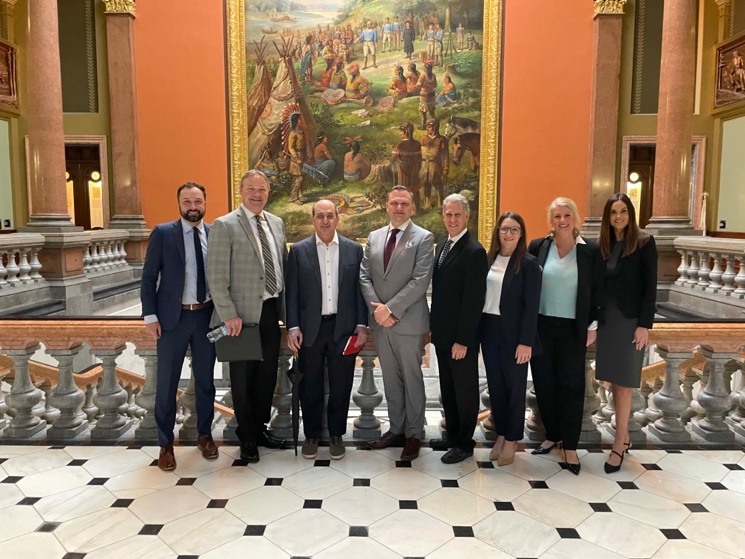
On March 4, community oncology leaders from across Illinois attended the first-ever US Oncology Network Advocacy Day in Springfield. Dr. Paul Fishkin of Illinois CancerCare, along with Dr. Destry Elms and Dr. David Hakimian of Illinois Cancer Specialists, joined members of their practice leadership teams for a full day of meetings with state lawmakers.
While the Illinois House of Representatives was not in session, the timing created a unique opportunity to engage directly with members of the Illinois Senate, including key leaders such as Senate President Don Harmon (D) and Senate Minority Leader John Curran (R). In total, the group held 10 meetings with a bipartisan group of senators throughout the day.
During discussions with state lawmakers, physicians emphasized the importance of close-to-home, community-based care and addressed several pressing policy issues facing community oncology practices today. Lawmakers engaged in thoughtful dialogue around payer downcoding practices, which can undermine fair reimbursement and create financial instability for independent practices. The group also shared concerns and perspectives on Illinois’ proposed Prescription Drug Affordability Board (PDAB), underscoring the need to ensure that any cost-containment efforts do not inadvertently limit patient access to critical cancer treatments or disrupt the oncology care delivery system.
Physicians and practice leaders also took time to express their appreciation to senators for passing nation-leading legislation last year to rein in harmful pharmacy benefit manager (PBM) practices.
The inaugural US Oncology Network Advocacy Day in Springfield reinforced the value of direct engagement between physicians and policymakers. If you are interested in hosting a site visit for your state representative or state senator, please contact Angela.Storseth@usoncology.com.
Texas Oncology Submits Comments on AI RFI
Texas Oncology recently submitted comments in response to the Department of Health & Human Services (HHS) Request for Information (RFI) on accelerating the adoption of artificial intelligence (AI) as part of clinical care.
In its comments, Texas Oncology outlined its recommendations to implement AI in patient care, while lowering risk for independent practices. Texas Oncology recommended that HHS evaluate public-private partnerships, grants and direct funding, and tax incentives to ensure that community oncology practices are well-equipped to implement these new technologies into existing workflows.
“AI has the potential to improve cancer care quality and efficiency, but only if adoption is supported by deliberate policy design. Structured incentives, regulatory clarity, and infrastructure investment are essential to ensure community oncology practices can participate fully in the digital transformation of healthcare. Without targeted support, underinvestment in AI will accelerate consolidation, reduce patient choice, and increase overall healthcare costs,” the letter read.
To read more, CLICK HERE.
Dr. Debra Patt Speaks at Community Oncology Alliance Summit
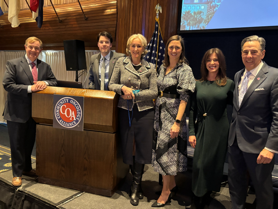
On February 11, Dr. Debra Patt, a breast cancer specialist at Texas Oncology and current president of the Community Oncology Alliance (COA), delivered remarks on the “state of community oncology.” During her speech, Dr. Patt highlighted updates on national oncology issues, policy priorities for the upcoming year, and developments within Congress and the administration.
Dr. Patt emphasized the strength and resilience of the community oncology landscape, noting, “The state of community oncology is strong. We are driving innovation to serve the mission of providing the best cancer care in our communities and providing our patients cutting edge treatment close to home.”
COA will host its annual meeting in Orlando, Florida, on April 28–29. The event brings together independent community oncology professionals from across the country to address today’s challenges, share innovative solutions, and advance the mission of ensuring patients have access to high-quality, affordable cancer care close to home. The Network is once again looking forward to participating in this important gathering and contributing to these critical conversations.
Dr. Rich Ingram, Shenandoah Oncology, Authors Op-Ed in Virginia Mercury
Dr. Rich Ingram, Shenandoah Oncology, recently penned an op-ed highlighting the need to protect patient access to community oncology as policymakers consider efforts to lower drug costs.
Virginia lawmakers have recently introduced a proposal to create a Prescription Drug Affordability Board (PDAB) to lower drug costs. In his op-ed, Dr. Ingram applauded the intent of this policy but cautioned that upper payment limits (UPLs) that can be implemented by PDABs can create viability challenges for independent practices if they are set below the cost of acquiring and storing a drug.
“Practices simply cannot pay more for a medication than they are reimbursed. When that happens, options for a local clinic shrink fast: stop offering the drug, send patients elsewhere, stop accepting certain insurance, or close the doors entirely,” he explained.
Dr. Ingram recommended that if lawmakers move forward with a PDAB, they must include rigorous guardrails to protect patient access to care. “Patients deserve both affordability and access. Virginia can deliver both — if we get the details right and protect the hometown care that keeps our families whole,” he concluded.
To read the op-ed, CLICK HERE.
President Trump Highlights Drug Costs in State of the Union Address
In his State of the Union address to Congress on February 23, President Trump highlighted his administration’s efforts to lower the cost of prescription drugs. He pointed to initiatives such as most-favored-nation pricing agreements with pharmaceutical manufacturers and the TrumpRx program, which offers discounted medications.
President Trump reiterated his longstanding claim that these negotiations have helped ensure the United States no longer pays disproportionately high prices for prescription drugs compared to other countries. He emphasized that the most‑favored‑nation framework has been central to his approach for securing lower costs for patients and taxpayers.
President Trump also called on Congress to codify the most‑favored‑nation pricing structure into law. He argued that placing this policy into statute would provide long‑term stability, preserve the savings his administration pursued, and reinforce prescription drug affordability as a national priority.
To read more, CLICK HERE.
Minnesota Department of Health Releases Report on 340B Program
A new report from the Minnesota Department of Health reveals that the state’s hospitals and clinics participating in the 340B Drug Pricing Program gained at least $1.34 billion in revenue in 2024. The state’s top 25 eligible entities received 90% of the total revenue collected, with one single health system receiving 26% of total revenue.
General Acute Care Hospitals received 80% of total revenue, while Critical Access Hospitals received 10% of the total revenue. Minnesota is currently the only state to collect and publish such data.
The report arrives amid significant legal and regulatory developments. A federal court recently struck down the Health Resources & Services Administration’s (HRSA’s) requirement that new offsite outpatient facilities appear on a hospital’s filed Medicare cost report to be eligible to use discounted drugs under 340B.
Additionally, the Trump administration recently scrapped a plan to require drugmakers to provide rebates for drug discounts, rather than providing them to covered entities up front. The Health Resources and Services Administration is now seeking feedback on how a similar rebate model might be implemented and has recently extended the deadline for comments.
To read more, CLICK HERE.
To read the federal court’s decision, CLICK HERE.
To read more about the rebate model, CLICK HERE.
Trump Administration Targets Fraud in Healthcare
As part of a national crackdown on waste, fraud, and abuse in healthcare, the Trump administration announced a six-month moratorium on Medicare enrollment for certain suppliers of durable medical equipment, prosthetics, and orthotics (DMEPOS), which includes items such as walkers, hospital beds, and blood sugar monitors.
“The amount of fraud is so massive that it’s easier to open one of these suppliers than to open a bank account,” said Centers for Medicare & Medicaid Services (CMS) Administrator Dr. Mehmet Oz during a press conference with Robert F. Kennedy, Jr., Secretary of the Department of Health & Human Services (HHS), and Vice President JD Vance.
The moratorium will not stop the distribution of medical equipment. The pause will last six months, though federal law permits additional six-month extensions.
To read more, CLICK HERE.
Casey Means, Surgeon General Nominee, Appears Before Senate
Casey Means, the Trump administration’s pick for surgeon general, recently appeared before the Senate Health, Education, Labor, and Pensions Committee. During the nomination hearing, Means shared her vision for addressing the root causes of chronic disease. She faced tough questions from committee members – including Senator Bill Cassidy (R-LA) and Bernie Sanders (I-VT) – about her stance on vaccines, among other divisive issues.
Means is an author and influential voice behind HHS Secretary Robert F. Kennedy Jr.’s “Make America Healthy Again” agenda. She has faced scrutiny from some lawmakers and medical associations as she does not hold an active medical license and didn’t complete her medical residency. Her brother, Calley Means, currently serves as a senior adviser in the Department of Health and Human Services.
President Donald Trump nominated Means for surgeon general in May after withdrawing his previous choice, Dr. Janette Nesheiwat. The Senate HELP Committee will now consider whether to advance Means’ nomination, in which case it would go to a vote in the full Senate.
To learn more, CLICK HERE.
House Ways & Means Committee Holds Hearing on Healthcare Workforce
The U.S. House Ways and Means Committee on Health recently held a hearing concerning workforce needs to advance the next generation of America’s healthcare workforce.
During the hearing, Jason Shenefield, MBA, FACHE, President and CEO of Phelps Health in Rolla, Missouri, testified about rural residency development and their mission to keep high-quality care close to home. Emily Hawes, PharmD, BCPS, CPP, Director of the Rural Residency Planning and Development and Teaching Health Center Graduate Medical Education (GME) Technical Assistance Centers, testified on issues related to workforce expansion in rural and underserved settings.
To sustain these critical rural programs, witnesses suggested that Congress pass legislation to ensure rural facilities are not disadvantaged in Medicare Graduate Medical Education (GME) payments and take concrete steps to develop, expand, and sustain rural training.
To read more, CLICK HERE.