September 22, 2026
Health Policy Report – September 22, 2026
GOP Doctors Caucus Endorses H.R. 4299
On September 16, the GOP Doctors Caucus announced its endorsement of the Protecting Patient Access to Cancer and Complex Therapies Act (H.R. 4299).
“As physicians, we know that lowering prescription drug costs for seniors cannot come at the expense of their ability to access those medicines in the first place,” said GOP Doctors Caucus Co-Chair and H.R. 4299 sponsor Congressman Greg Murphy, M.D. (R-NC) “H.R. 4299 provides a commonsense solution that preserves the savings of Medicare drug price negotiation while ensuring physicians are not collateral damage in negotiations between the federal government and drug manufacturers. Patients battling cancer and other serious diseases should be able to receive the treatment they need from the physician they trust and, in the community where they live.”
This announcement marks a significant milestone in The Network’s ongoing advocacy to advance this legislation and ensure sustainable payment for Medicare Part B drugs.
To read the GOP Doctors Caucus statement, CLICK HERE.
The Network Submits Comments in Response to MPFS Proposed Rule
On September 14, The US Oncology Network submitted its comment letter in response to the Medicare Physician Fee Schedule proposed rule.
The Network emphasized that Medicare reimbursement continues to fall further behind the cost of delivering cancer care. “The Network believes the current Medicare physician payment framework is unsustainable and is accelerating the erosion of independent community oncology practices across the country. The 2027 PFS proposed rule is the latest example of a payment system that continues to move further out of step with the realities of delivering cancer care to Medicare beneficiaries,” the letter read. The Network expressed its support for physician payment reform that provides predictable updates tied to medical inflation and protects patient access to community-based care.
The Network went on to highlight its concerns with potential disruptions associated with the implementation of the Medicare Drug Price Negotiation Program. It expressed its support for the Protecting Patient Access to Cancer and Complex Therapies Act (H.R. 4299) to preserve patient access to physician-administered therapies.
The Network expressed its opposition to the Centers for Medicare and Medicaid’s proposal to reduce payment for E/M services billed with modifier -25, urging the agency to withdraw the proposal and use existing code-specific review processes if valuation concerns exist.
The Network also reiterated its concern that the 2026 radiation oncology payment restructuring created significant reimbursement instability for many community-based providers. “While CMS intended these policies to modernize radiation oncology reimbursement and improve payment accuracy, the resulting reimbursement reductions for many community-based providers have been substantially greater than CMS anticipated,” the letter read. The Network urged the agency to work closely with stakeholders as it refines radiation oncology payment policy.
To read the full letter, CLICK HERE.
Drs. Busby, Funk, and McNally Pen Article on Medicare Payment Reform
In a recent article, Dr. Leslie Busby, Chief Medical Officer of The Network, Dr. Ryan Funk, Chief Radiation Oncology Officer of The Network, and Dr. Amy McNally, Chief Surgical Officer of The Network, highlighted their concern with the Medicare Physician Fee Schedule (MPFS) proposed rule and urged lawmakers to address the financial pressures facing independent oncology, including radiation oncology and surgical services.
“Buried in Medicare’s payment proposal for 2027 are double-digit cuts that could further strain independent community oncology. The proposal includes reimbursement reductions of up to 14% for certain surgical services, 40% for hundreds of clinical lab tests, and 35% for proton therapy, an advanced form of radiation that can precisely target tumors while minimizing damage to healthy tissue and organs,” they wrote.
The authors highlighted that this year’s proposed rule continues a long-standing pattern of payment instability that makes it difficult for physicians to continue investing in their practices and remain competitive with large hospital systems, which receive higher payments from Medicare for the same service.
They went on to emphasize that The Network is urging policymakers to address the underlying problems with Medicare physician payment rather than relying on temporary fixes to prevent cuts year after year. Policymakers have introduced the Patients First Act (H.R. 9693) and the Protecting Patient Access to Cancer and Complex Therapies Act (H.R. 4299), both of which will help provide the stability needed to preserve access to care.
To read the article, CLICK HERE.
Dr. Asad Dean Authors LTE in the Dallas Morning News
In a recent letter to the editor in the Dallas Morning News, Dr. Asad Dean thanked Congressman Marc Veasey (R-TX) for his continued support of community oncology, including his recent co-sponsorship of the Protecting Patient Access to Cancer and Complex Therapies Act (H.R. 4299).
Dr. Dean highlighted how upcoming changes to Medicare Part B drug reimbursement could place additional financial strain on independent oncology practices, potentially limiting access for patients in need of cancer care. “If local clinics disappear, Texas patients will just have to travel farther for care at large hospital systems. That’s an added burden for any patient, especially those who live in the most rural corners of our state,” he wrote.
He went on to emphasize the need to advance H.R. 4299, which would maintain current reimbursement levels for physicians without raising the cost of care for patients. “H.R. 4299 protects patient access to high-quality, convenient and affordable cancer care from local oncologists. Thank you, Rep. Veasey, for recognizing the importance of independent cancer care and helping to protect it,” he concluded.
To read the LTE, CLICK HERE.
Minnesota Oncology Hosts Senator Amy Klobuchar

On September 21, Minnesota Oncology hosted Senator Amy Klobuchar (D-MN) at its Maple Grove clinic. Senator Klobuchar toured the clinic, learning firsthand about the role of community oncology in providing patients with high-quality care close to home.
During the visit, Senator Klobuchar and Dr. Paul Thurmes also discussed the importance of affordable, accessible healthcare. Dr. Thurmes emphasized the need for policymakers to prioritize affordability, access, and transparency while ensuring a diverse and competitive healthcare system.
If your practice is interested in hosting a site visit, please contact Angela Storseth at angela.storseth@usoncology.com.
Oncology Hematology Care Hosts Site Visit with Ohio Representative Jean Schmidt
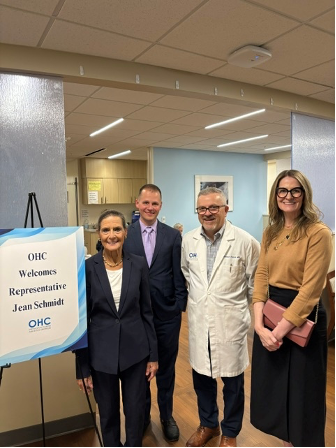
On September 16, Oncology Hematology Care hosted Ohio Representative Jean Schmidt, Chair of the Health Committee, for a site visit at its Eastgate location. During the tour, led by Dr. Randy Drosick, Eired Eddy from The US Oncology Network government relations team, and Kyle Miller from Pappas and Associates, Chair Schmidt learned more about the value of close-to-home cancer care.
The discussion highlighted how insurer and PBMs’ use of white bagging policies can significantly delay care. Chair Schmidt was supportive of OHC and its efforts to restrict white bagging through House Bill 682.
If your practice is interested in hosting a site visit, please contact Angela Storseth at angela.storseth@usoncology.com.
Virginia Oncology Associates (VOA) Hosts Site Visit with Virginia Delegate Mark Downey
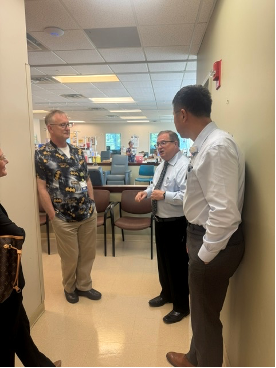
On September 16, Virginia Oncology Associates (VOA) hosted a site visit with Virginia Delegate Mark Downey. During the visit, Drs. David Powell and Bo Zhao highlighted the clinic’s offerings and held a discussion on the importance of community oncology and some of the challenges as an independent practice.
If your practice is interested in hosting a site visit, please contact Angela Storseth at angela.storseth@usoncology.com.
Virginia Governor Hosts Bill Signing Ceremony
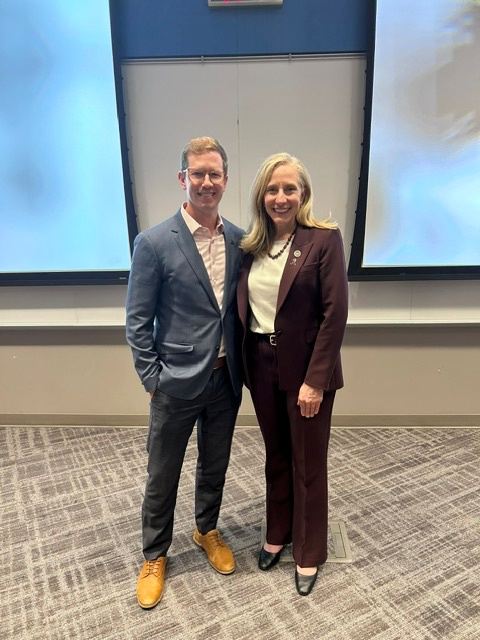
On September 16, Dr. Graham Watson attended a bill signing ceremony in Norfolk with Virginia Governor Abigail Spanberger. Dr. Watson represented VOA at the event to celebrate increased funding for Sickle Cell Disease during the 2026 legislative session.
Compass Oncology Hosts Staff with Congresswoman Marie Gluesenkamp Perez
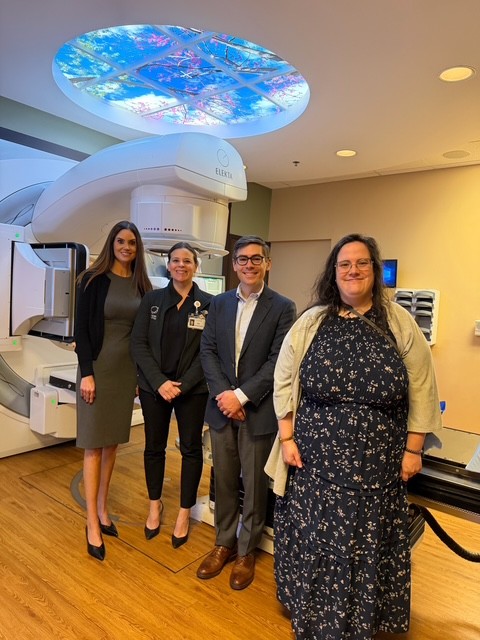
Compass Oncology recently hosted Sarah Kohout with the office of Congresswoman Marie Guesenkamp Perez at its Vancouver clinic. During the visit, Dr. John Schuler and Liza Bohmer, Executive Director of Compass Oncology, provided a tour of the clinic and discussed the challenges that make it difficult for patients to receive close-to-home care.
Dr. Schuler discussed the potential impact of upcoming changes to Medicare Part B drug reimbursement and emphasized the need to advance the bipartisan Protecting Patient Access to Cancer and Complex Therapies Act (H.R. 4299), which would protect practices from unsustainable cuts to drug reimbursement while lowering out-of-pocket costs for patients.
The discussion also highlighted the broader financial pressures facing independent practices, including Medicare physician payments that have failed to keep pace with inflation. Compass Oncology stressed the need to advance the bipartisan Patients First Act (H.R. 9693), which would create more predictable updates under the Medicare Physician Fee Schedule and strengthen the long-term stability of physician practices.
If your practice is interested in hosting a site visit, please contact Angela Storseth at angela.storseth@usoncology.com.
Dr. Jennifer Gordon Highlights Importance of H.R. 4299 in New Video
Dr. Jennifer Gordon, Willamette Valley Cancer Institute and Research Center, recently highlighted the value of community-based cancer care in a new video for Patients and Providers United. She describes how local treatment options allow patients to limit travel time, spend more time with family, and lead to better health outcomes overall.
“When patients have fewer local care options because community oncology practices are forced to close, it undermines not only their quality of life, but their ability to receive this lifesaving care,” she said.
Patients and Providers United continues to encourage lawmakers to advance H.R. 4299 and preserve access to local care.
To watch the video, CLICK HERE.
NCODA Offers Opportunity to Participate in Sign-On Letter on Step Edits
NCODA has launched a comprehensive Step Edits Hub to raise awareness of the harmful impact of step edits on patients and care teams. The hub brings together educational resources, practical tools, and opportunities to take action in support of timely access to the treatment selected by a patient’s care team.
As part of this effort, NCODA has also launched a sign-on letter, which allows oncology practices and individual oncology professionals to add their voices in support of patient access to timely treatment.
To view the Step Edits Hub, CLICK HERE.
To read the practice or organization letter, CLICK HERE.
To read the individual sign-on letter, CLICK HERE.
Congress Faces End-of-Year Deadline for Expiring Health Programs
Funding for the majority of government healthcare programs is currently set to expire at the end of December, giving lawmakers an end-of-year deadline to extend these programs.
Through legislation passed earlier this year, Congress funded programs including community health centers, Medicare adjustments, grant programs, and others through December 31. Congress also passed a stopgap funding bill that keeps the federal government funded through December 11.
As lawmakers work to address these funding deadlines, they may have opportunities to take up healthcare issues that have been on Congress’ agenda, including sustainable Medicare physician payment, rising hospital prices, and transparency efforts.
House Committee on Energy and Commerce Holds Hearing on Physician Pay
On September 15, the Health Subcommittee of the House Committee on Energy and Commerce held a hearing on bills to reform Medicare payment.
Among the bills considered was the Patients First Act (H.R. 9693), which would tie Medicare physician payment to inflation and update budget neutrality thresholds to provide more predictable payment updates. The bill received widespread support from lawmakers and witnesses at the hearing, building momentum to include the legislation in a markup.
“We have left far too many seniors without access to a primary care provider and pushed more care delivery into more expensive settings through decades of declining reimbursement under the Medicare physician fee schedule,” Congressman John Joyce, M.D. (PA-13), who introduced H.R. 9693, said in the hearing.
To read the committee press release, CLICK HERE.
To watch the hearing, CLICK HERE.
Trump Administration Said to be Working on More Drug Pricing Deals
The Trump administration is working on more drug pricing deals with pharmaceutical companies, according to CMS Administrator Mehmet Oz.
Currently, CMS has announced most favored nation (MFN) pricing agreements with 26 pharmaceutical companies to lower costs for certain drugs under Medicaid. CMS Administrator Oz recently said that the agency is working to expand pricing deals to more companies, which already cover about 89% of the brand drug market.