June 2, 2026
Health Policy Report – June 2, 2026
Texas Oncology Leaders Meet with Governor Greg Abbott to Highlight Community Cancer Care Across Texas

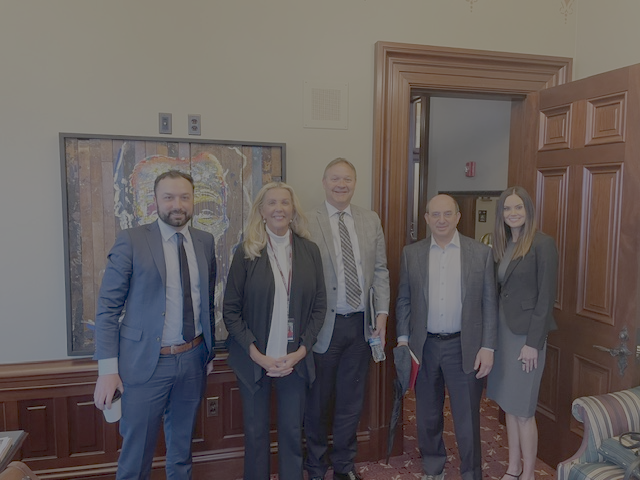
On May 22, leaders from Texas Oncology met with Governor Greg Abbott for a discussion on the critical role of community oncology in Texas. Dr. Paulson, Dr. Patt, and Dr. Taylor highlighted the importance of high-quality care, the need for a competitive healthcare landscape, and Texas Oncology’s continued investment in communities across Texas.
The conversation also touched on Texas Oncology’s leadership in clinical research and mission to expand access to innovative therapies for patients in both urban and rural communities. Leaders emphasized that bringing research into community settings helps ensure more Texans can participate in groundbreaking treatment opportunities where they already receive care.
If you are interested in hosting an advocacy event or site visit for your state representative or state senator, please contact Angela.Storseth@usoncology.com.
Illinois Lawmakers Adjourn Without Passing PDAB Legislation
The Illinois General Assembly adjourned its spring legislative session on June 1 without advancing legislation that would have created a Prescription Drug Affordability Board (PDAB). The Network successfully opposed SB 3496 (as amended by House Amendment 1), which would have established a PDAB with authority to set state-level Upper Payment Limits (UPLs) on certain high-cost drugs, prioritizing drugs selected for Medicare price negotiation. This approach is similar to a recent bill vetoed by Governor Spanberger in Virginia.
This was made possible through advocacy from Illinois CancerCare and Illinois Cancer Specialists, who participated in a Day at the Capitol, conducted site visits with state lawmakers, and issued an action alert.
The Network will continue to fight back against similar price-setting proposals that jeopardize the patients’ access to community oncology.
Virginia Governor Abigail Spanberger Vetoes PDAB Bill (HB483/SB271)
On May 21, Virginia Governor Abigail Spanberger vetoed HB 428/SB 271, which would have established a Prescription Drug Affordability Board (PBAB) in Virginia.
While the goal of lowering prescription drug costs is important, the legislation raised serious concerns for Virginians in need of local cancer care. Specifically, many providers, patients, and independent analysts worried it could threaten patient access to care, as reduced reimbursement rates would undermine the financial stability of independent community oncology practices.
Had the legislation taken effect as written, some clinics may have been forced to reduce services or close, potentially requiring patients to seek treatment in hospital settings, which are often more expensive, less convenient, and farther from home.
This policy win came thanks to the advocacy of Blue Ridge Cancer Care, Virginia Cancer Specialists, Virginia Oncology Associates, and Shenandoah Oncology.
To read more, CLICK HERE.
House Energy & Commerce Health Subcommittee Holds Hearing on MPFS Reform, House Ways & Means Committee Advances Physician Pay Reform Legislation
On May 20, the House Energy & Commerce Subcommittee on Health held a hearing entitled, “Examining the Medicare Physician Fee Schedule, MACRA, and Opportunities for Payment Reforms.” During the hearing, lawmakers discussed ways to stabilize Medicare reimbursement, including adjusting the budget neutrality threshold and establishing an inflationary update.
“An increase based on the Medicare Economic Index [MEI, a measure of healthcare inflation], among other reforms, would not only ensure payment keeps up with the rising input costs, but also simplify the healthcare payment system,” said Ranking Member Rep. Diana DeGette (D-CO).
On May 21, the House Ways & Means Committee unanimously voted to advance the Provider Reimbursement Stability Act (H.R. 8163), which would help prevent automatic cuts caused by Medicare’s budget neutrality requirements. Sponsored by Congressman Greg Murphy, M.D (R-NC), the bipartisan legislation would raise the budget neutrality threshold from $20 million to $54.3 million and index the threshold to the cumulative percentage increase in the MEI every five years.
“Physicians in America have been crushed for decades by persistent cuts to the Medicare Physician Fee Schedule. Access to high-quality, affordable care is drying up around the country, particularly in rural communities because reimbursement is less than the cost of care. These reductions are driving independent physicians out of practice, either to retire early, sell out to private equity, or be acquired by consolidated hospital systems,” Dr. Murphy said in a press release.
To read more, CLICK HERE.
To read highlights and watch a full video of the hearing, CLICK HERE and HERE.
To read a press release on H.R. 8163, CLICK HERE.
Supreme Court Rejects Challenge to Medicare Drug Price Negotiation
On May 18, the Supreme Court declined to hear pharmaceutical companies’ challenges to the Medicare Drug Price Negotiation Program, which was created by the Inflation Reduction Act. In effect, the decision upholds several rulings from lower courts that allowed the government to continue negotiating drug prices under Medicare while other lawsuits are pending.
AstraZeneca, Novo Nordisk, Novartis, Bristol Myers Squibb, Johnson & Johnson (through Janssen Pharmaceuticals), and Boehringer Ingelheim all challenge the constitutionality of the federal drug price negotiation process. Specifically, they claimed that the law violates the First Amendment by compelling them to adopt the government’s definition of a maximum fair price and violates the Fifth Amendment by depriving manufacturers of property without just compensation and denying procedural due process.
While rejecting the companies’ appeal of lower court rulings, it is important to note that the Supreme Court did not rule on the merits of the pharmaceutical manufacturers’ arguments.
To date, Medicare has negotiated prices for 25 drugs, and the Trump Administration earlier this year announced plans to expand negotiations for an additional 15 drugs.
To read more, CLICK HERE.
House Education & the Workforce Committee Advances PBM, Hospital Price Transparency Bills
On May 21, the House Committee on Education and the Workforce held a markup and advanced the PBM Kickback Prohibition Act, which would bar PBMs from providing kickbacks and referral fees to intermediaries. During the markup, the bill was significantly rewritten to address several loopholes that would have allowed PBMs and other entities to avoid compliance.
The committee also advanced the Transparency in Billing Act of 2026, which would require hospitals to include a separate, unique health provider identifier for the department in which the treatment was provided when submitting a claim for hospital outpatient services and include it on all claims for services billed to commercial health plans or their enrollees.
The bills will now be considered by the full House of Representatives.
To watch the markup, CLICK HERE.
Taxpayers Urge Senate to Reject MFN Legislation
In a May 20 letter, the Taxpayers Protection Alliance (TPA) urged the Senate to oppose legislative efforts to codify most favored nation (MFN) drug pricing, warning that such government price controls could undermine research and development and threaten patient access.
“Price controls have a terrible track record of improving healthcare access. European countries, which rely extensively on drug and medical device price controls in their healthcare systems, have learned this lesson the hard way,” the letter reads. “Another cautionary tale is the federal government’s current drug price control policies implemented under President Biden, via the 2022 Inflation Reduction Act (IRA), which have been continued under President Trump.”
The letter went on to reference the Center for Medicare & Medicaid Innovation’s push to establish the GLOBE and GUARD models. “Expanding the government’s authority to implement drug pricing schemes through GLOBE and GUARD would risk undermining America’s innovation ecosystem, threaten patient access to lifesaving medicines, and repeat the policy mistakes that have failed abroad.”
To read the letter, CLICK HERE.